
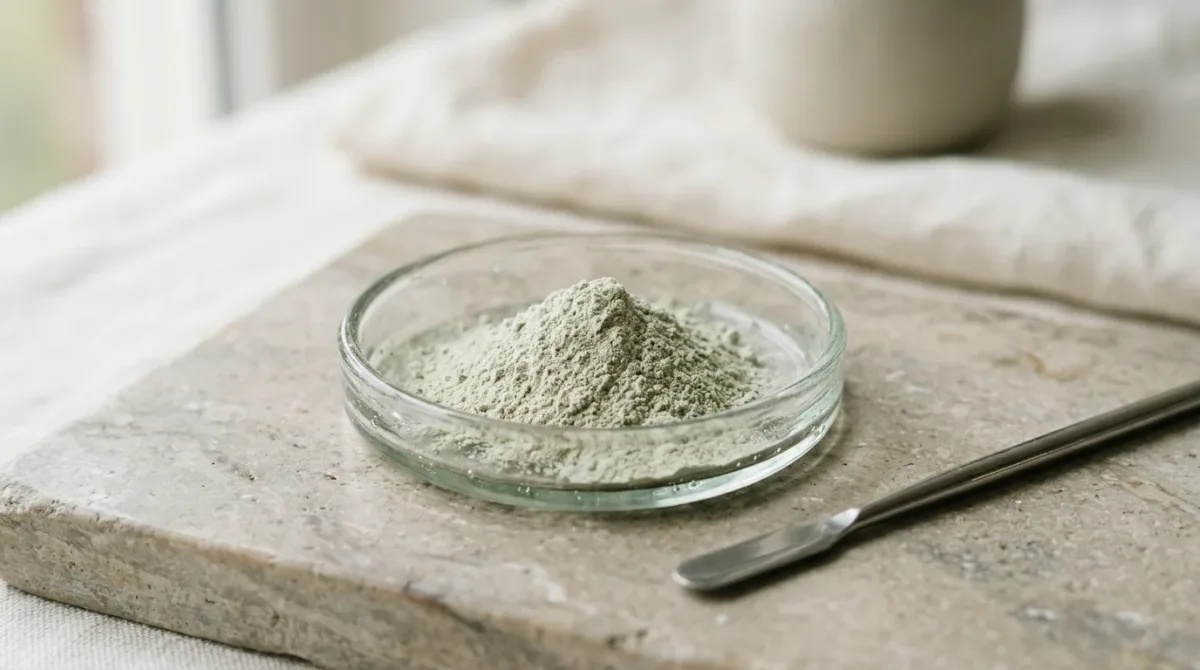
The Food and Drug Administration proposed a rule in December 2024 that would require standardized testing methods for detecting asbestos in talc-containing cosmetic products, the agency announced. The proposal, open for public comment before any final rule, would give the agency a uniform analytical method — polarized light microscopy combined with transmission electron microscopy — rather than the varying manufacturer-selected tests currently in use. It is a proposed rule, not an enforceable requirement; the effective date comes only after the comment period and finalization, per the FDA's notice.
New York Health & Beauty publishes information, not medical advice, and this report is consumer information from the agency's own documents. Questions about individual products belong with a clinician or the manufacturer.
Why talc, and why now?
Talc and asbestos occur in geologically associated deposits, which is why contamination of talc with asbestos is the industry's standing contamination concern. The FDA has authority over cosmetic safety but, as the agency notes in its own materials, cosmetics do not require premarket approval — so testing practices have varied by manufacturer, and the agency's surveillance has relied on its own sampling of the market. Those sampling programs have periodically reported asbestos-contaminated talc products, prompting recalls, per the FDA's recall notices in recent years.
The proposed rule addresses the method, not the tolerance: it standardizes how asbestos is looked for in cosmetics containing talc. The detail other coverage skipped — the rule would also cover cosmetics marketed as asbestos-free only if the testing supports the claim, tightening a label that has until now traveled on each brand's own chosen assay.
What would change on the shelf?
If finalized as proposed, talc-containing cosmetics — pressed powders, eyeshadows, blushes, dry shampoos — would be tested to a federal standard before distribution, and the label claims would attach to that standard, per the notice. For the reader's shelf, the practical change is traceability: a claim of purity tested one uniform way, rather than a method chosen by the seller and described, if at all, in varied terms.
What the record does not establish is a timeline. Proposed rules commonly change between proposal and finalization, comment periods extend, and effective dates follow the final rule by a compliance window the agency sets. The document is a step in a documented process, and its meaning for the industry is exactly that: the process has begun.