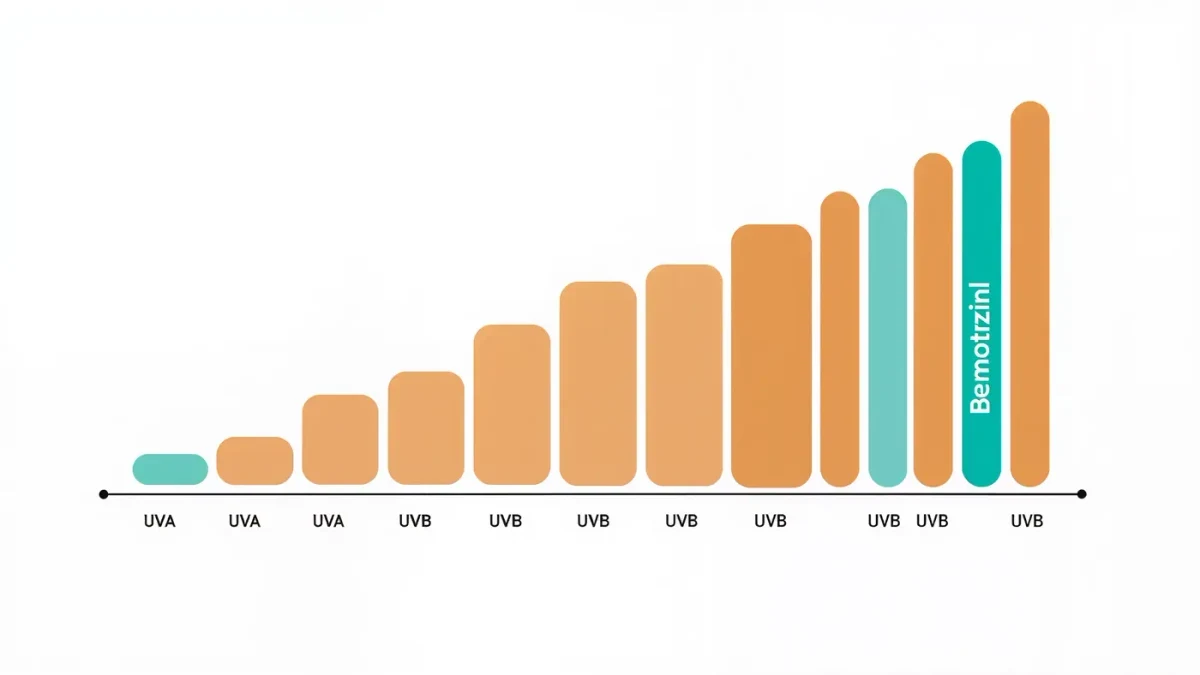

The FDA on December 12, 2025 issued a proposed administrative order that would add bemotrizinol, a modern photostable UV filter, to the over-the-counter sunscreen monograph at concentrations up to 6%, per the agency's announcement. If finalized, it would be the first new sunscreen active ingredient added in the United States in roughly two decades — a regulatory change that could reshape the American sunscreen shelf, though it has not yet done so.
What is bemotrizinol?
Bemotrizinol, whose INCI name is bis-ethylhexyloxyphenol methoxyphenyl triazine, is a broad-spectrum UV absorber prized for photostability: it does not meaningfully degrade in sunlight, which lets formulators build high-SPF products without heavy filter loads. It is the backbone of many European and Asian sunscreens, where it has been used for years under other regulators' approvals. In the US system, sunscreen active ingredients are regulated as drugs, which is why a widely used global filter needs an FDA order before domestic products can include it.
Why has the US sunscreen list been frozen?
Because of how the rules are built. Under the CARES Act framework, sunscreen ingredients live or die by administrative orders against the monograph, and the agency has asked manufacturers of older filters for additional data — studies some companies declined to fund, given the cost. The result has been a shelf stuck with filters approved decades ago, while abroad formulators combined newer photostable filters into textures American consumers could only buy while traveling. The bemotrizinol proposal, per the agency, is the first crack in that freeze since 1999-era approvals.
When will bemotrizinol sunscreens reach shelves?
Not immediately. The December 12, 2025 action is a proposed order with a public comment period that ran into January 2026, per the Federal Register publication. As of mid-2026, no final order has been issued, and even after a final order, products would need formulation, stability testing, and FDA registration before sale. A realistic reading, given that sequence: the earliest consumer-visible effect is late 2026 at best, with meaningful shelf presence more plausibly a 2027 story.
What should sunscreen shoppers do now?
Use what already works. The FDA's existing guidance remains that broad-spectrum sunscreen SPF 15 or higher, used as directed, reduces skin cancer risk and early skin aging — and current American filters are effective when applied properly and reapplied. Bemotrizinol's arrival would expand texture options and photostability margins, not rescue an inadequate shelf. The change that matters most to skin health, it should be said, is still application behavior: most people apply a quarter to half of the labeled amount, which blunts even the best filter's labeled protection.