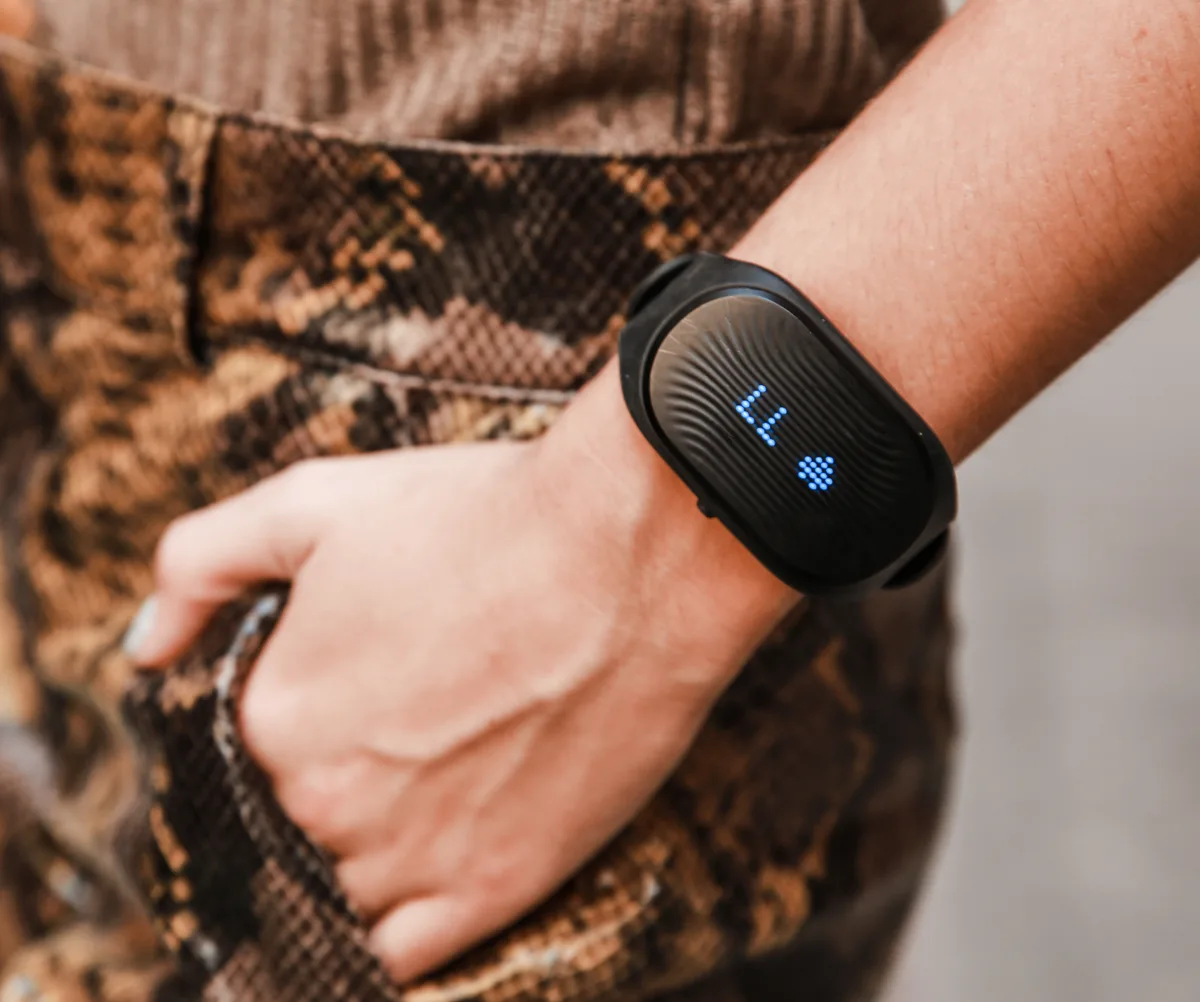

If your wrist device reports one number you can trust, it is steps. Validation research — most prominently a 2017 Stanford Medicine study of seven popular wrist-worn devices, published in the Journal of Personalized Medicine — found heart-rate estimates often landed within a few percent of chest-strap references, while energy-expenditure figures erred by more than 20 percent on every device tested. Step counting, the oldest and simplest measurement in the stack, remains the metric validation studies consistently rank as most accurate.
Readings that matter clinically — irregular heart rhythms, blood pressure, sleep disorders — belong with medical-grade testing and a clinician, not with a consumer wearable's suggestion.
How accurate are step counts, really?
In controlled walking conditions, wrist devices count steps within a few percent of manual tallies — respectable, given the task. Error grows at the edges: very slow walking, where arm swing shrinks; pushing a stroller or shopping cart, where the wrist is occupied; uneven terrain and hill work; and devices worn on the ankle-adjacent side of the body the algorithm did not expect. Wrist placement is the method's central trade — convenient, but measuring the arms and inferring the legs.
The practical reading: day-over-day and week-over-week trends are dependable even where absolute counts wobble. Averaging across days smooths the quirks of any single walk.
What did the validation studies find?
| Metric | Typical accuracy vs reference |
|---|---|
| Steps | Often within a few percent in lab walking |
| Heart rate, steady exercise | Close for many devices; worsens at high intensity |
| Heart rate, intervals and strength work | Meaningful errors, delayed response |
| Energy expenditure (calories) | Errors exceeding 20 percent across all devices (Stanford, 2017) |
| Sleep stages | Reasonable duration estimates; stage estimates least settled |
The Stanford study's structure explains the pattern: each device was worn alongside gold-standard references — medical-grade oxygen analysis for energy, ECG-based monitoring for heart rate — during a supervised protocol of walking and running. Heart rate is directly measurable at the wrist with optical sensing; energy expenditure, by contrast, is inferred from a model combining heart rate, motion, and demographic averages, and model error compounds where individual physiology varies.
Why are calorie estimates so far off?
Because the wrist is guessing. Energy expenditure depends on the actual work done, which a wrist sensor samples indirectly through motion and pulse. Two people with identical heights, weights and step counts can burn materially different calories, yet devices must print a single number. The 2017 findings — errors exceeding 20 percent on every unit, in both directions — have been echoed across subsequent independent comparisons: the direction of error varies, which rules out a simple correction.
The strategic advice that follows is almost mathematical: use the device to compare, not to audit. If today's activity figure exceeds yesterday's by your own hand's effort, the ranking is informative; the absolute figure is a costume.
Does where you wear the device change the numbers?
More than most users expect. Validation work comparing placements has generally found hip- and waist-mounted pedometers slightly more accurate for steps than wrist devices, since they measure the legs directly — at the cost of the convenience that made wrists dominant. Ankle- and shoe-mounted sensors edge further ahead for slow walking, the hardest case. Wrist optical heart-rate sensors, meanwhile, tighten with fit: a snug band a finger's width above the wrist bone measurably outperforms a loose one, because sensor light struggles through gaps and motion artifacts. None of this converts a watch into a lab, but for steps and pulse, placement and fit are the cheapest accuracy upgrades available.
Do step goals based on tracker data improve health outcomes?
The encouraging branch of this literature concerns consequences rather than precision. Step-based interventions — many built on wearable feedback — have been associated in large observational analyses with lower all-cause mortality at higher daily step volumes, and randomized trials of tracker-based programs report modest increases in activity. When the measurement nudges behavior, small counting errors matter less: the goal is more movement, and the device reliably registers more movement, whatever its absolute accuracy.
How should you actually use your tracker?
- Treat steps as the headline metric — best validated, most actionable.
- Read calories as a relative gauge, never as a bank balance to spend on food.
- Expect heart-rate drift during intervals and lifting; chest straps remain the reference for serious training.
- Watch the trend line, not any single day — devices, like scales, speak most honestly over weeks.
The verdict the studies support is strangely reassuring: the least glamorous number on the watch is the best one. Steps, counted simply and reported honestly, earn their place on the wrist; the calorie figure earns a polite skepticism.
A closing note on context. The devices will keep improving, and their claims will keep arriving faster than their validation — that asymmetry is structural, not conspiratorial. The reader's durable defense is the same one validation researchers use: a reference standard, however humble. Ten minutes of counted steps on a familiar route, a chest strap borrowed for a week, a logbook that outlives any single gadget — each converts marketing into measurement. The wrist can be trusted, the studies suggest, precisely as far as it has been tested; the rest of the screen is a forecast.