Short answer: the strongest evidence for cold plunges covers mood, recovery from hard endurance efforts, and the physiology of cold shock adaptation — while claims about immune boosting, calorie-burning weight loss, and metabolic transformation remain largely unproven in humans. A 2023 overview published in PLOS ONE, pooling 5,578 first-time winter swimmers across cold-exposure studies, reported no consistent evidence that regular cold-water immersion produces lasting changes in immune function, though it did document acute improvements in mood and reductions in perceived stress.
Cold water immersion carries real cardiac risk — sudden immersion triggers a gasp reflex and blood-pressure spike, and cardiologists caution people with heart conditions, arrhythmias, or uncontrolled hypertension against plunges without medical clearance. That caution comes straight from emergency-medicine literature, not wellness marketing.
What actually happens to the body in cold water?
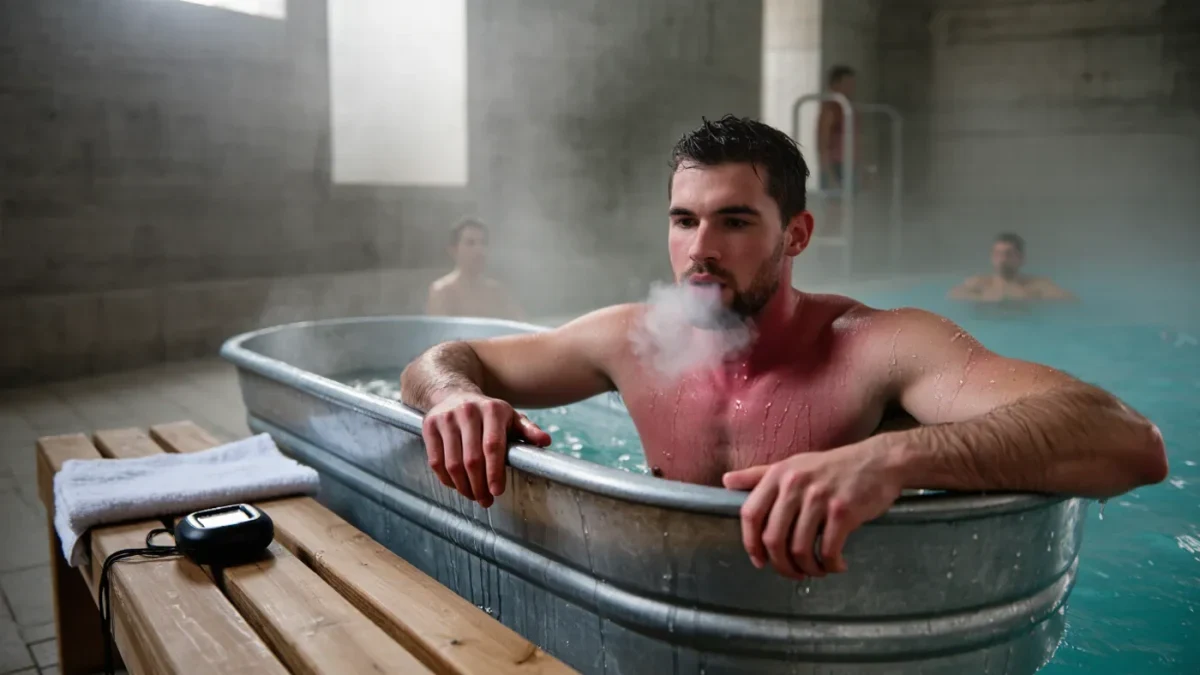
Immersion below roughly 15°C (59°F) sets off the cold shock response within seconds: involuntary gasping, hyperventilation, and a surge of noradrenaline and cortisol. Studies of cold-water immersion indexed through the National Institutes of Health consistently show noradrenaline rising two- to three-fold, which is the most plausible mechanism behind the widely reported post-plunge mood lift. A small randomized trial published in BMJ Case Reports in 2023 — five participants, self-selected, so preliminary by design — found self-reported alertness and pride increased after 10 minutes at 10°C for four weeks. The authors flagged the sample size themselves.
Does cold water speed muscle recovery?
The evidence splits by sport, which most coverage skips. Cold immersion reliably reduces delayed-onset muscle soreness after eccentric exercise — meta-analyses of cold-water immersion trials published through 2022 report soreness reductions of roughly 20 to 30 percent at 24 to 48 hours compared with passive rest. But the same research shows a cost: blunting inflammation appears to blunt adaptation. A 2015 study in the Journal of Physiology found that cold water immersion after resistance training reduced muscle protein synthesis and satellite cell activity, the cellular machinery of hypertrophy. For endurance athletes racing multi-day events, cold plunges are defensible; for lifters chasing muscle growth, the evidence points the other way, and Sports Medicine reviews since 2019 have repeated that warning.
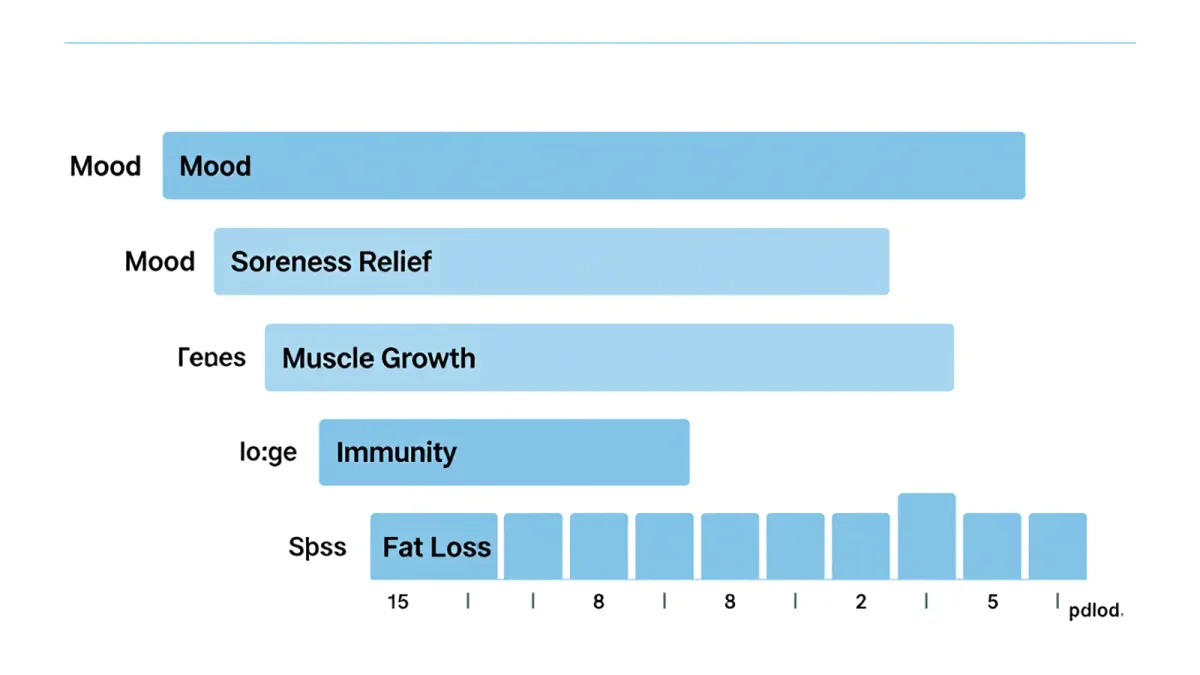
| Claim | What studies show | Verdict |
|---|---|---|
| Acute mood and alertness lift | Noradrenaline rises sharply; small trials show improved self-reported alertness | Supported, mostly small or short studies |
| Reduced soreness after endurance work | Meta-analyses show 20–30% less soreness at 24–48h | Reasonably supported |
| Better muscle growth | Immersion post-lifting reduced protein synthesis in a 2015 trial | Not supported — evidence suggests the opposite |
| Immune "boost" | 2023 PLOS ONE overview found no consistent lasting immune change | Unproven |
| Weight loss via brown fat | Cold raises energy expenditure acutely; sustained fat loss untested in trials | Unproven |
What about brown fat and metabolism?
Cold exposure does activate brown adipose tissue, the metabolically active fat that burns glucose and fat molecules to generate heat. Imaging studies summarized by the National Institutes of Health show cold-induced brown fat activity varying widely between people and declining with age. The gap between mechanism and outcome matters here: acute energy expenditure rises measurably in a plunge, but no controlled trial has demonstrated that regular plunging produces clinically meaningful weight loss. The claim as marketed — cold plunging as a fat-loss tool — outruns the trials behind it.
How long and how cold does research actually use?
Study protocols cluster between 5 and 15 minutes at 10–15°C, often in laboratories where participants are supervised. Athletes commonly use 11–15°C for shorter bouts. What the literature does not define is an optimal "dose" — head-to-head comparisons of temperatures and durations are scarce, and the popular 3-minute rule circulating in fitness media traces to convention, not to a trial. Anyone starting cold immersion is, in effect, self-dosing an intervention the research has not standardized.
The Arctic-runner question: does habituation matter?
Regular winter swimmers show a blunted cold shock response over repeated exposures — the gasp and hyperventilation attenuate, a phenomenon documented in cold-adaptation research since the 1990s. Some researchers argue this habituation itself is the intervention, improving tolerance of physiological stress in a way that generalizes. That hypothesis — often labeled cross-adaptation or hormesis — is intriguing and still short of proven; reviews through 2024 call the human evidence suggestive but preliminary.
What the New York wellness market is selling
Plunge studios have spread across Manhattan and Brooklyn, typically charging per session for tubs held near 39–50°F, and some gyms now pair saunas with cold barrels. The science supports the post-plunge mood effect those studios trade on; it does not currently support detox, immunity, or weight-loss framing — claims responsible operators tend to soften, and regulators historically have not. Buyers should treat the experience as what the evidence shows: a nervous-system stimulus with documented acute effects, priced accordingly.
The bottom line
Cold plunges have real, documented acute effects — alertness, mood, soreness relief after endurance work — and a genuine cardiac risk profile that deserves respect. The immune and fat-loss marketing is ahead of the human trials. If muscle growth is the goal, the 2015 protein-synthesis findings argue for keeping plunges away from lifting days. Read that way, the plunge is best understood the way an ingredient chemist reads a functional extract: active, measurable, and nowhere near the label on the bottle.