
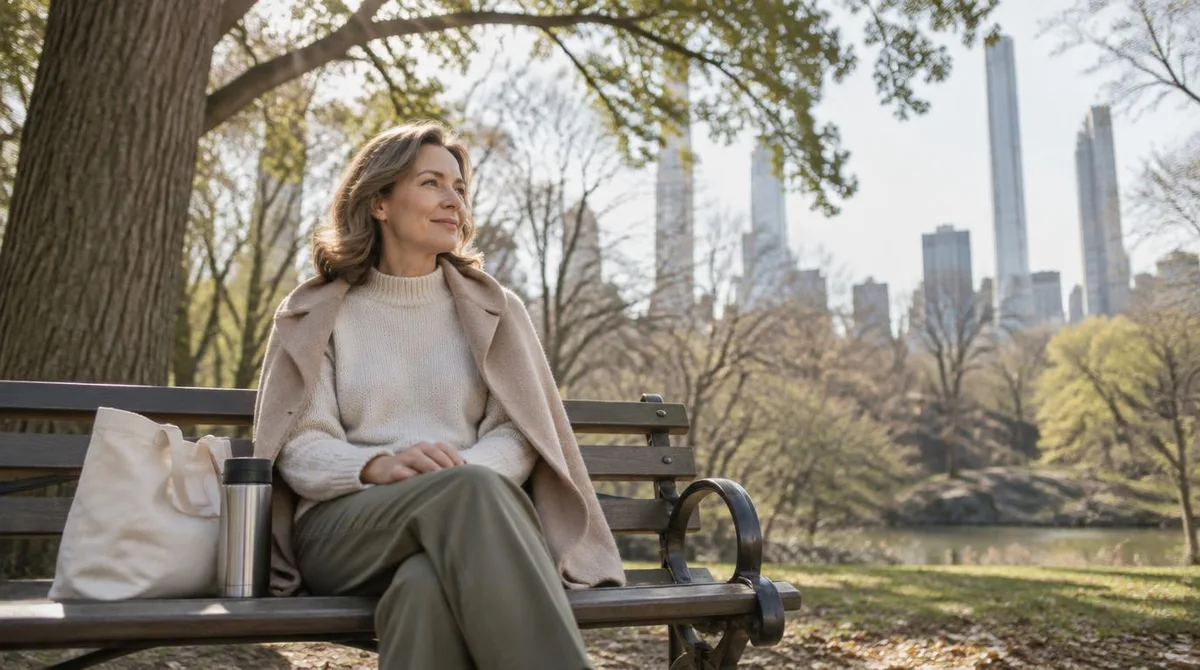
Forest bathing, New York style, is a slow loop or a parked bench under the oaks, phone in the pocket. The trials behind the practice measured real physiology. Per a 2019 University of Michigan study in Frontiers in Psychology, urban dwellers saw the steepest cortisol decline at 20 to 30 minutes of nature contact. That number, not the incense, is where this file starts.
The evidence runs on small panels, so these numbers describe early signals rather than settled dosing. The sections below keep that border visible. For the winter counterpart, the review of light therapy lamps follows what bright-light trials support. The wellness hub keeps the rest of the nature file.
What Did the Japanese Forest Experiments Measure?
Stress physiology in working forests, not questionnaires. A 2010 review in Environmental Health and Preventive Medicine pooled field experiments across 24 forests in Japan. Bum-Jin Park and colleagues at Chiba University ran the program. In all, 280 subjects walked in and viewed forest or city areas on alternating days.
Salivary cortisol ran lower after forest time, and blood pressure and pulse rate fell with it. Heart rate variability shifted toward the parasympathetic, rest-and-digest branch. Each visit paired a short walk with a viewing period, about 16 and 14 minutes on average, with saliva sampled at both ends. The crossover design sent every group to both settings, which gave the comparison unusual cleanliness for field research. This connects to our earlier piece, Sauna and Heart Health: What the Cohort Studies Actually Show.
How Big Were the Samples?
Small, and the researchers treat that as a border. Each Japanese experiment used 12 subjects, enough for within-person comparisons yet thin for population claims. The 2019 Michigan study followed 36 urban dwellers for eight weeks.
Small panels limit exactly the conclusions a reader wants most. How long the calm lasts, and who benefits beyond healthy young adults, stay open questions. The Japanese cohorts averaged around age 22. "Early findings" is the honest label here, and none of these numbers amounts to a clinical dose.
Does the Research Transfer to a City Park?
The urban data says the shape holds. In the Michigan field study, participants chose their own nature time at least three times a week. Salivary cortisol dropped at 21.3 percent per hour beyond the hormone's natural daytime decline. The steepest payoff landed between 20 and 30 minutes.
New York gives that protocol a dense target. The city health department's public space data story ties outdoor activity and socialization to lower stress in adolescents. It also notes the Walk to a Park Initiative, and where tree canopy and grass grow, outdoor air runs cooler. Central Park supplies the scale a Manhattan walker needs without leaving the island.
What Forest Bathing Is Not
It is not a treatment claim. The measured outcomes are biomarkers such as cortisol and blood pressure, plus self-reported mood. No trial here replaces care from a clinician for a diagnosed condition such as depression. The studies themselves kept to healthy young volunteers, which narrows every headline built on them.
The honest framing is preventive. Forests and parks nudged measurable stress markers in the right direction in the cited work. Readers managing a condition can hold green time as a complement to their care plan, not a substitute for it. Readers following this should also see Ashwagandha and Stress: What the Randomized Trials Support, and Where the Regulators Object.
Conclusion: Small Numbers, Real Signals
Forest bathing reaches New York with a legible file. Japanese field experiments measured cortisol and blood pressure cleanly across 24 forests. Small urban panels turned nature time into a 20 to 30 minute habit. The samples stay small, and the biomarkers keep moving in the same direction.
For a reader with a lunch hour and a park entrance, the research points at one habit. It costs nothing but minutes, and Central Park sits within reach of most of Manhattan. The oaks have been waiting.