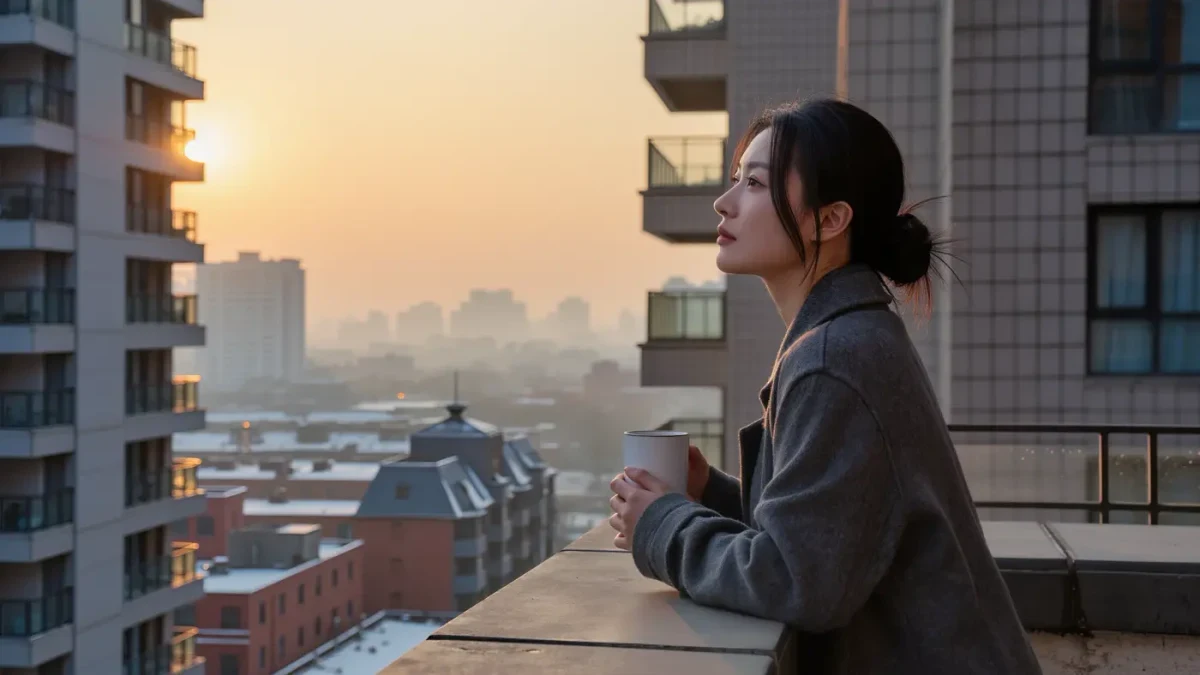
Short answer: most circadian studies and practical protocols land on about 10 minutes of direct outdoor morning light on a sunny day, and 20 to 30 minutes under heavy overcast skies, because clouds cut illuminance by a factor of ten or more. The figure comes from photobiology, not wellness folklore: the light-sensitive cells of the retina — intrinsically photosensitive retinal ganglion cells, described in landmark 2002 Science papers — carry the day-night signal to the brain's master clock, and they respond to the sheer brightness of outdoor daylight in a way window-filtered indoor light almost never matches.
People with retinal disease, migraine triggered by light, or questions about light therapy devices should raise them with an eye doctor or clinician.
Why does morning light matter at all?
The circadian system runs on light timing. Light arriving in the early biological morning shifts the clock earlier and anchors it; light arriving late at night shifts it later and degrades sleep quality. Research summarized by the National Institutes of Health shows the morning signal does three measurable things: it terminates melatonin production, it sets the phase of the following night's sleep, and it builds the day-night contrast the clock needs to stay synchronized. A 2017 field study in the Journal of Clinical Sleep Medicine found that office workers in daylit environments slept, on average, 46 minutes more per night than colleagues in windowless ones — one of the cleaner real-world demonstrations of the effect.
How bright are we talking?
The numbers are stark. A sunny summer morning measures 50,000 to 100,000 lux outdoors; a bright overcast one, 1,000 to 10,000 lux. A well-lit office typically delivers 300 to 500 lux at the desk, and even a seat beside a large window rarely exceeds 1,000 lux with blinds up. The photoreceptors that drive circadian response scale with illuminance, which is why the same ten minutes produces a strong signal in July and a weak one through a January window. These ranges appear in illuminance tables maintained by the Illuminating Engineering Society and in daylight-measurement literature cited by sleep researchers.
Does the time of morning matter?
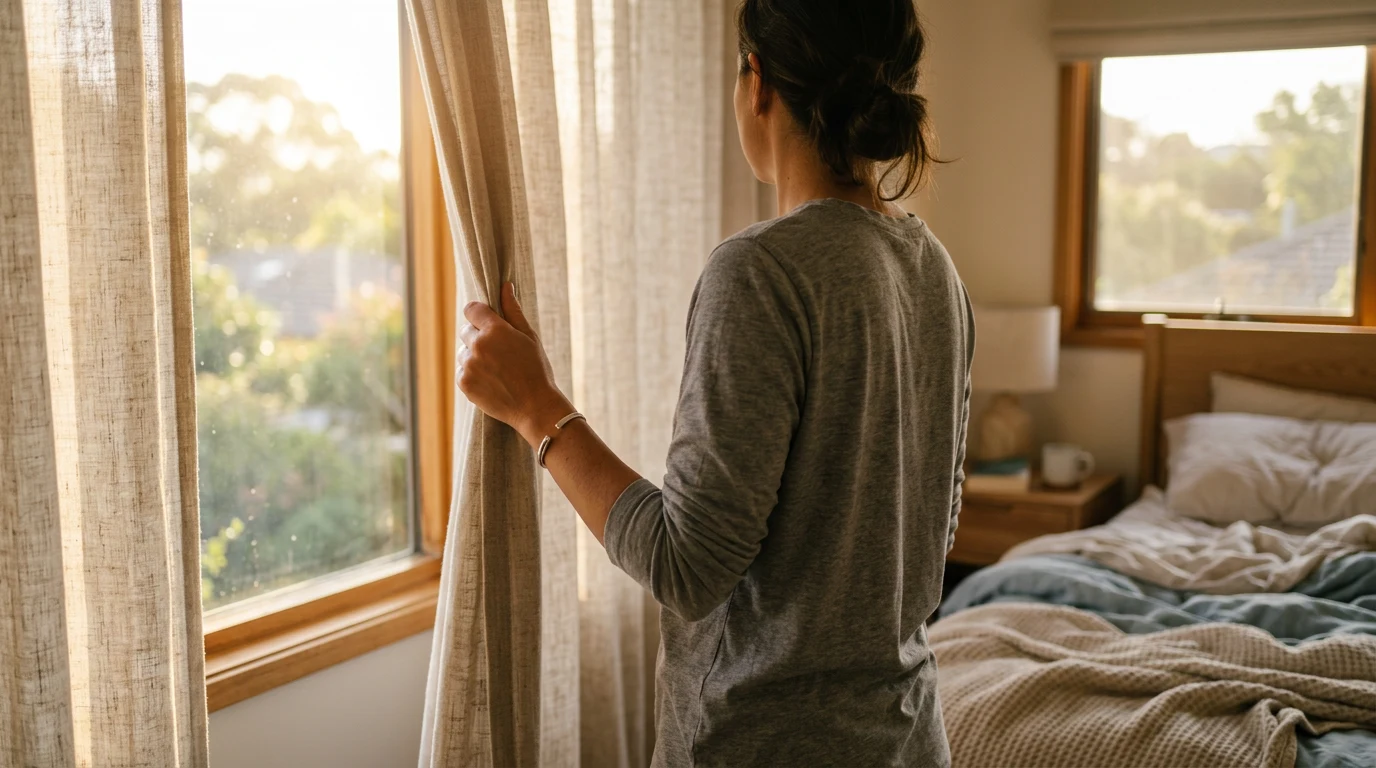
Yes — the window matters nearly as much as the dose. Circadian phase-response curves, mapped in controlled lab studies, show the clock is most responsive to light shortly after a person's habitual wake time and least responsive — indeed actively shifted later by — light in the hours before habitual sleep. Wake time, not sunrise, defines the window for most people: light within the first hour or so of waking carries the strongest phase-advancing signal. Light exposure, per a 2022 study of light timing and depression risk published in Nature Mental Health using roughly 85,000 UK Biobank participants, also associated with mental-health outcomes: people with brighter daytime light exposure and darker nights showed lower odds of major depressive disorder and better mood measures than those with dim days and lit nights.
| Condition | Typical illuminance | Suggested outdoor-equivalent time |
|---|---|---|
| Clear sunny morning | 50,000–100,000 lux | About 10 minutes |
| Heavy overcast | 1,000–10,000 lux | 20–30 minutes |
| Window seat indoors | Under 1,000 lux | Not a substitute |
| Standard office lighting | 300–500 lux | Not a substitute |
Can a light box replace going outside?
Partly. Light therapy boxes delivering 10,000 lux are validated for seasonal patterns and are the standard studied alternative in winter at high latitudes, where a New Yorker leaving for work in darkness in December may not see meaningful sunlight until late morning. Devices positioned 30 to 60 centimeters away for 20 to 30 minutes approximate outdoor morning brightness, and clinical reviews support their use for winter-pattern symptoms under clinician guidance. What boxes do not replicate is daylight's full spectrum and movement, and the research comparing devices to genuine outdoor time head-to-head remains thin.
What about sunglasses, cloudy New York winters, and office towers?
Practical wrinkles abound in this city. Midtown's street canyons shadow sidewalks even on sunny days; useful light still arrives from open sky, which delivers thousands of lux even in shade. Cloudy does not mean useless — the overcast multiplier simply stretches the needed time. And the commute itself can do the work: a walk to the subway during daylight hours contributes meaningful exposure, whereas a rideshare or an underground line contributes none.
Is there such a thing as too much morning light?
For people without eye conditions, outdoor morning brightness is not a documented hazard — the sun's ultraviolet load is the usual reason for eye protection, and standard sunglasses worn for glare comfort also filter much of the circadian signal, a trade-off ophthalmologists note without alarm. The documented risk sits at the other end of the day: bright light in the late evening, which the same phase-response curves show delaying the clock and suppressing melatonin.
The bottom line
The dose the research supports is simple: within an hour of waking, roughly 10 minutes outdoors on a clear day or 20 to 30 under clouds, with a 10,000-lux box as the studied fallback for dark winters. The 46-minute sleep difference from the daylit-office study is a fair estimate of what a reliable morning signal is worth.