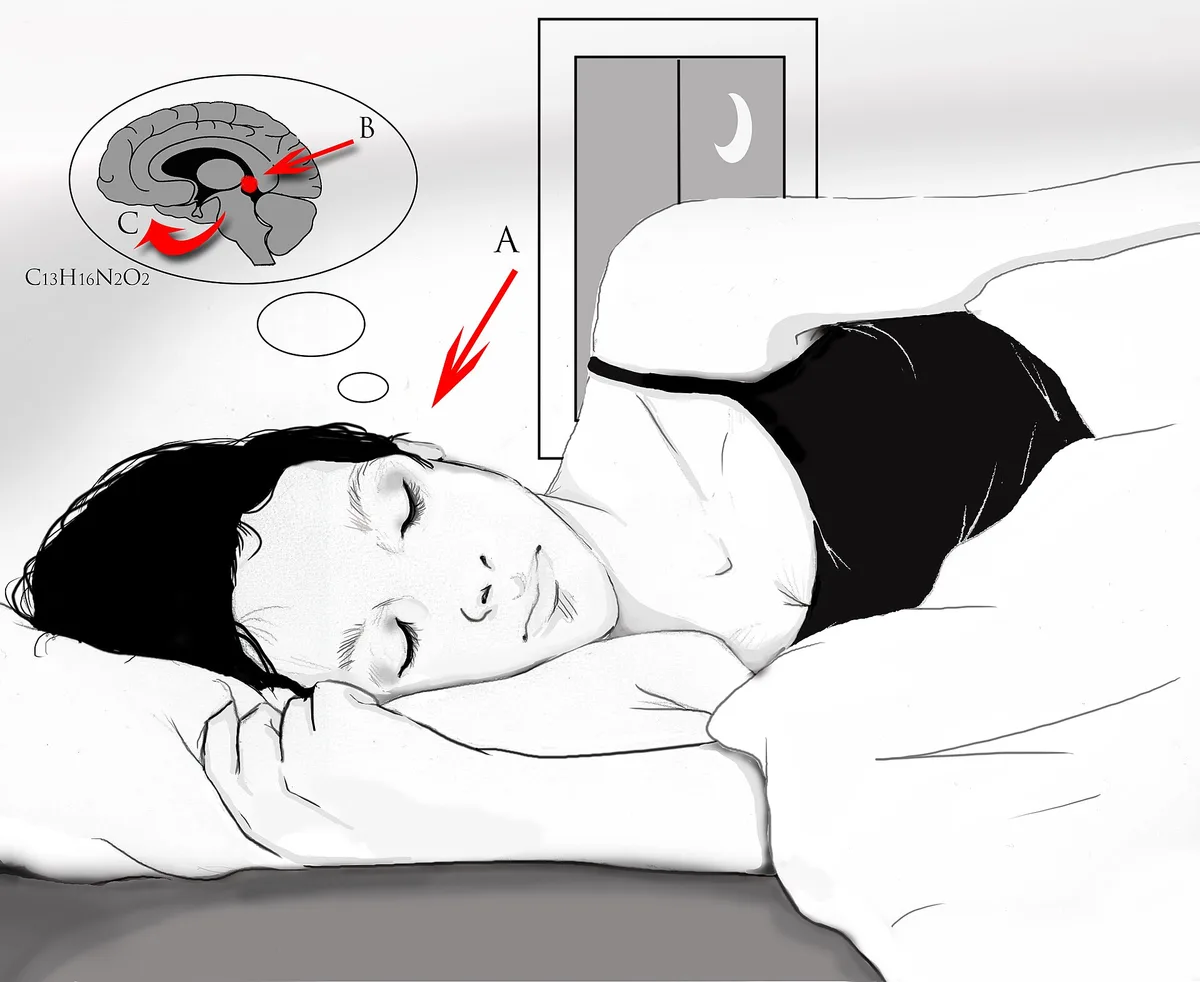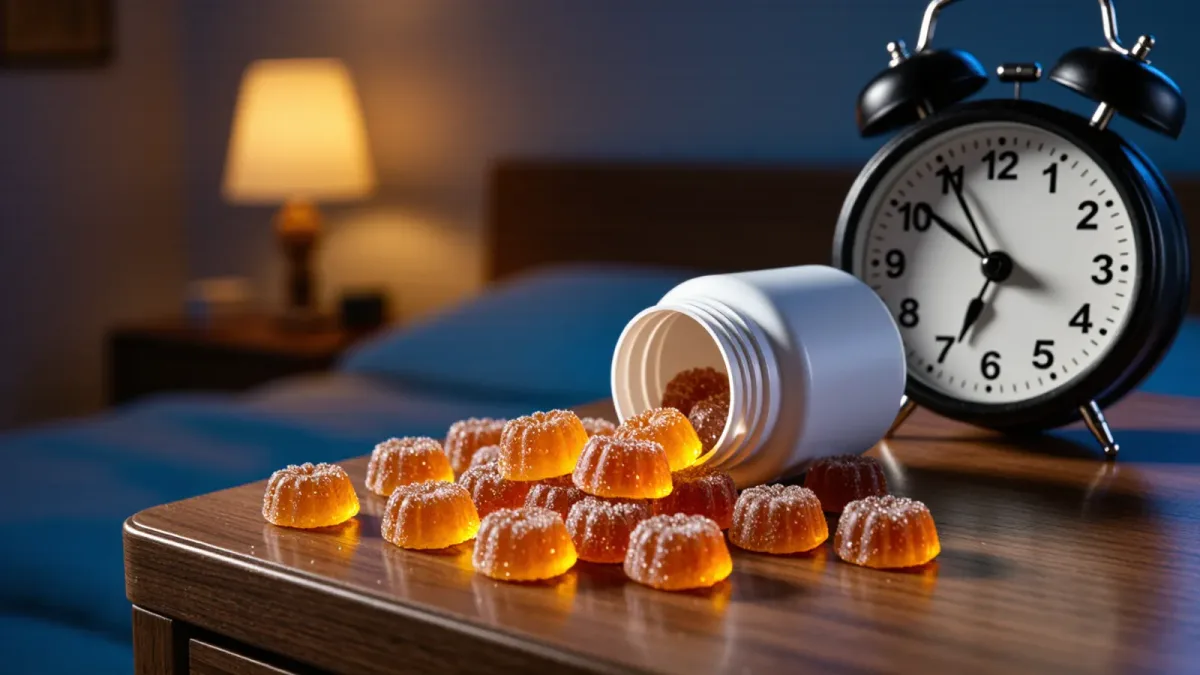

The data on the bottle is not always the data in the bottle. When Erland and Saxena analyzed 31 melatonin supplements bought at Portland-area stores, published in the Journal of Clinical Sleep Medicine in 2017, actual melatonin content ranged from 71 percent to 347 percent of the labeled amount, with lot-to-lot variation within a single product of up to 465 percent — and one lot contained serotonin, a substance with no legitimate place in a sleep supplement. That gap between label and contents frames every dose question about melatonin, in adults and especially in children.
Insomnia in a child or an adult is a diagnosable condition, and evaluation and treatment belong with a clinician, not a gummy.
What dose does the actual research use?
The trial range is wide because melatonin's roles are wide. For circadian phase shifting — the jet-lag and delayed-sleep-phase use — trials typically used 0.5 to 5 milligrams taken hours before target bedtime, and the classic Cochrane review by Herxheimer and Petrie in 2002 found 0.5 to 5 mg effective for jet lag across ten trials. For hypnotic purposes in adults, the American Academy of Sleep Medicine's 2017 clinical practice guideline, by Sateia and colleagues, reviewed the randomized evidence and recommended against clinicians using melatonin for insomnia onset or maintenance, citing weak efficacy — not because the doses were wrong, but because the benefit over placebo did not clear the bar.
| Use | Dose in the literature | Strength of evidence |
|---|---|---|
| Jet lag | 0.5–5 mg near target bedtime | Supported by the 2002 Cochrane review |
| Delayed sleep-wake phase disorder | 0.3–5 mg, timed to phase | Supported by smaller controlled trials |
| Adult chronic insomnia | 2 mg and up in trials | AASM 2017 recommends against; weak efficacy |
| Children's sleep | 1–3 mg in studies | AASM 2021 advisory: not before clinical evaluation |
Doses are reported ranges from the cited publications, not recommendations; timing relative to bedtime varies by use and is a clinician-level detail.
How far off can the labeled dose be?
The 2017 analysis is the reference point and remains the most-cited content-accuracy study: of 31 products, 26 were mislabeled in content — melatonin ranged from 71 to 347 percent of label — and variability between lots of the same product reached 465 percent. The authors also noted that chewable products, the format children take, had the widest variation. The FDA has no premarket potency check to close this gap, which is the same structural point that makes third-party certification relevant on every supplement shelf.
A supplement whose content varies by a factor of nearly five between lots turns any dose discussion into a discussion about manufacturing first, pharmacology second.
What happened with children and the CDC data?
Poison-center statistics document a sharp rise. A report in the CDC's Morbidity and Mortality Weekly Report in February 2023 recorded 260,435 pediatric melatonin ingestions reported to poison centers from 2012 through 2021 — a 530 percent increase over the decade — driven largely by the shift to gummies, with most cases asymptomatic but a minority requiring hospitalization, and two deaths in the dataset. The American Academy of Sleep Medicine's 2021 health advisory responded directly: parents should not give melatonin to a child with sleep problems before that child has been evaluated by a physician, because insomnia in children frequently has an underlying behavioral or medical cause that a supplement will mask.
Is melatonin safe for adults at higher doses?
The short-term trial record shows tolerability at typical doses — headache, dizziness, and daytime sleepiness are the reported effects — but the higher-dose products on shelves now sell 10 to 20 milligrams per serving, amounts the efficacy literature rarely tested and the content-accuracy data makes still less predictable. Long-term safety data at those doses do not exist. Timing also matters more than amount for the circadian uses: a large dose taken at the wrong clock time shifts the phase the wrong way, which is why the timed-dose decisions above are clinical rather than label-driven.
What actually helps sleep, per the guidelines?
Cognitive behavioral therapy for insomnia remains the first-line treatment in the American College of Physicians' 2016 guideline — strong evidence, no pill required — with sleep-scheduling changes as its backbone. Melatonin's defensible niche, per the record above, is circadian timing problems: jet lag and phase-delayed schedules, at low single-digit doses, timed deliberately.
Frequently asked questions
Is 10 mg of melatonin too much?
It is far above the doses with efficacy evidence — 0.5 to 5 mg in the circadian trials — and above what the 2017 content study would let anyone count on receiving anyway. No long-term safety data exist at that dose, and the reported content can vary several-fold.
Can I give my child melatonin?
The American Academy of Sleep Medicine's 2021 advisory says not before a physician evaluates the sleep problem. Pediatric ingestions rose 530 percent from 2012 to 2021 per the CDC's MMWR, and gummy formats drove both the rise and the labeling-accuracy concern.
Does melatonin help with jet lag?
Yes — this is its best-evidenced use. The 2002 Cochrane review found 0.5 to 5 mg taken near target bedtime reduced jet-lag symptoms across trials. The timing, not the dose, does most of the work.
How do I know a melatonin product actually contains what it says?
Content accuracy is not verified by any government premarket check, per the FDA's regulatory structure. Products carrying third-party certification marks have outside lot testing, which addresses precisely the 71-to-347-percent variability documented in the 2017 analysis.