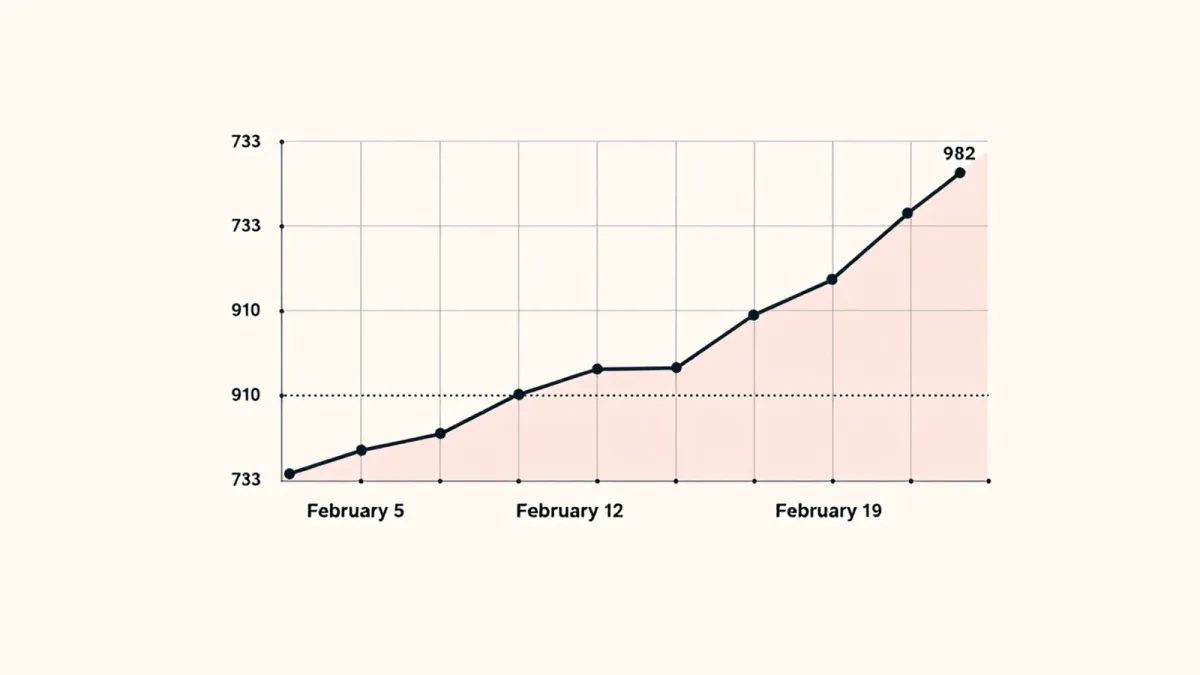
The United States counted 982 confirmed measles cases as of February 19, 2026, per CDC surveillance data — meaning the country approached 1,000 cases before winter was over, driven largely by a single outbreak in South Carolina that has grown to 973 cases. For New Yorkers, the figure is a reminder that a disease declared eliminated here in 2000 is again circulating in undervaccinated communities a short train ride away.
How fast is the 2026 outbreak actually growing?
Quickly, and on a predictable weekly rhythm. Per CDC updates, the national total stood at 733 cases on February 5, rose to 910 by February 12, and reached 982 on February 19 — an acceleration from roughly 180 cases a week to 272 in a single reporting cycle. Most confirmed cases are outbreak-associated rather than isolated travel infections, which matters because outbreak-associated spread indicates the virus is finding sustained chains of susceptible people, not just imported episodes that fizzle out.
Why is one outbreak driving so much of the total?
The South Carolina outbreak, which began in late 2025, accounted for 973 of the country's cases by mid-February — the largest active measles cluster in the United States, per reporting on the CDC's weekly updates. Its growth of 11 cases in one recent week illustrates the arithmetic of measles: in a community where vaccination coverage has slipped, each infectious case encounters enough susceptible people to sustain transmission for months. Measles is among the most contagious known viruses, and public health agencies generally estimate that 95% community coverage with two vaccine doses is needed to keep it from spreading.
What should New Yorkers check about their own immunity?
Per CDC guidance, adults are considered protected if they have documentation of two doses of MMR vaccine, laboratory evidence of immunity, or a confirmed measles diagnosis; people born before 1957 are generally presumed immune from prior infection. New York's routine childhood schedule delivers the first dose at 12 through 15 months and the second at ages 4 through 6. Anyone planning international travel — the common spark for U.S. outbreaks — is advised to confirm immunity before departure, since imported cases are what seeded the current wave. A clinician can order a simple blood test when records are missing.
What happens if the trend continues?
The comparison point is sobering. Per CDC data, 2025 closed with the highest annual measles count since 1991, and the 2026 curve reached in ten weeks what took most of last year to accumulate. If the current pace holds, 2026 would surpass that mark before summer. The practical takeaway for readers is the one the data supports: measles outbreaks in 2026 are concentrated where immunity gaps are, and a two-dose MMR record remains the single most reliable protection an individual can hold.