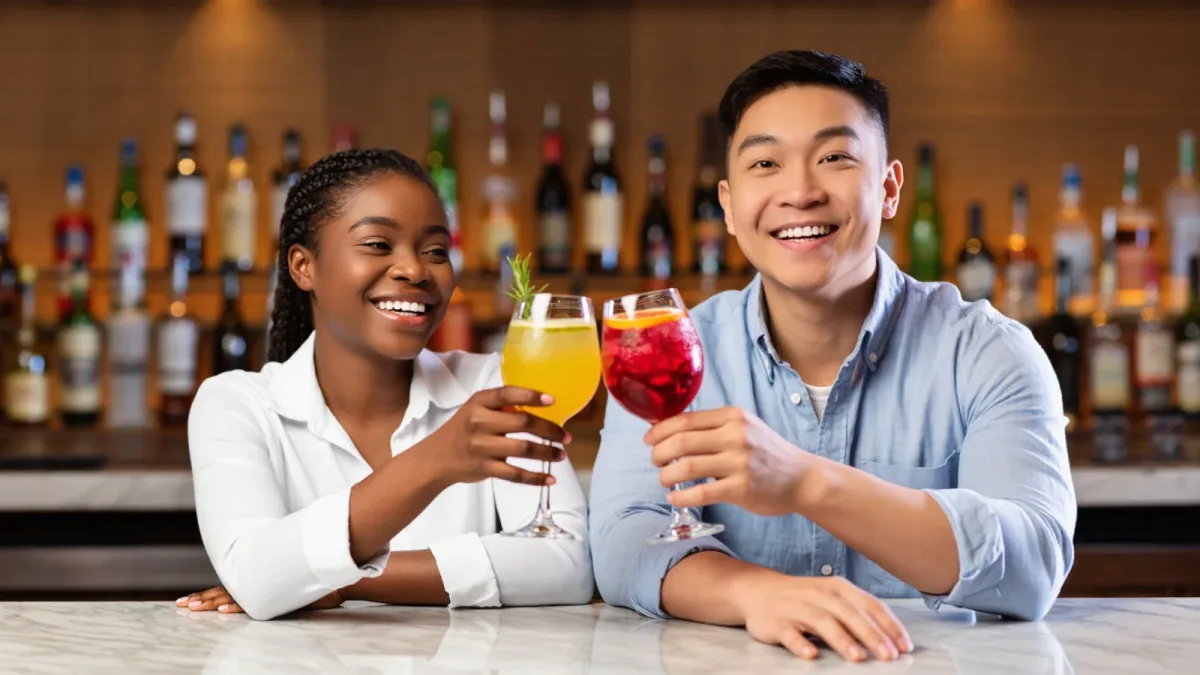
The alcohol-free category grew from punchline to shelf staple in under a decade, driven by consumers in their twenties and thirties who drink less without identifying as abstainers. The health logic is sounder than most trends: the World Health Organization's 2023 statement in The Lancet Public Health concluded that no level of alcohol consumption is safe for health, and replacing even some drinks removes those doses entirely. What the bottles add beyond that is mostly craft, not medicine.
Anyone using alcohol heavily or medicinally should involve a clinician in any change — abrupt cessation in dependent drinkers can be dangerous.
How big is the alcohol-free trend?
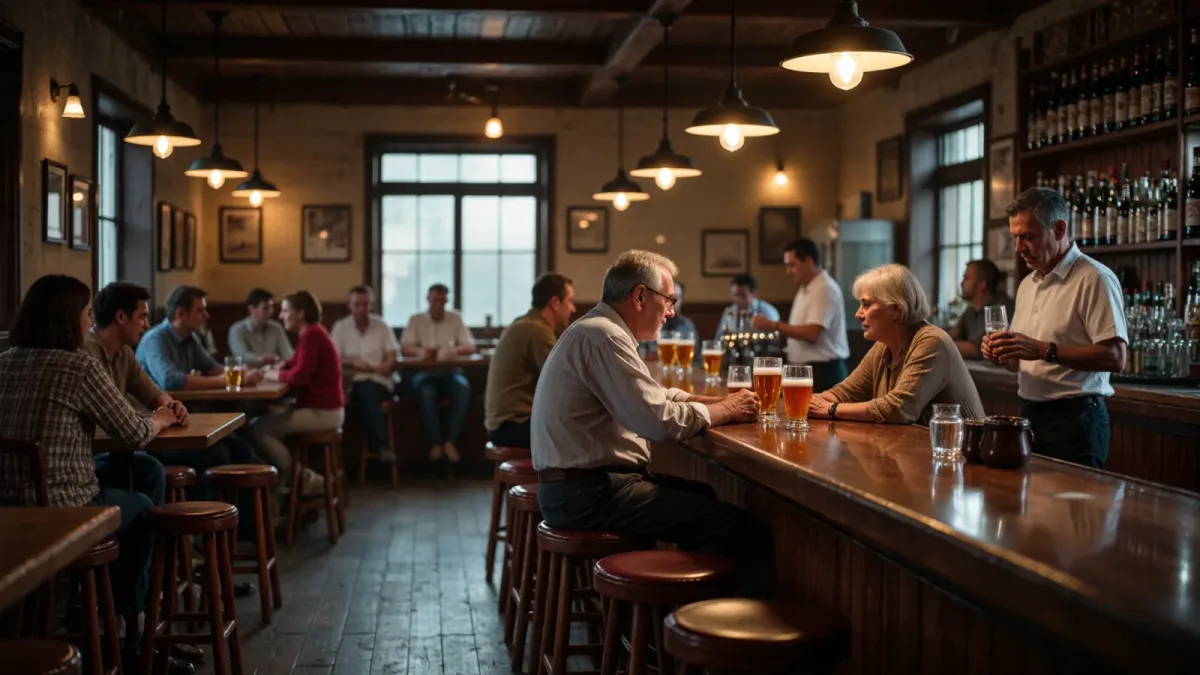
Large enough that legacy producers reorganized around it. Industry analyses through 2024 and 2025 put non-alcoholic beverages among the fastest-growing segments of the drinks market, with double-digit annual growth in the United States while total alcohol volumes stayed flat or declined among younger adults. New York's hospitality sector tracked the same curve: dedicated zero-proof bars opened across Manhattan and Brooklyn, and major restaurant groups added non-alcoholic pairings as a revenue line rather than an apology.
The category's own segmentation matters. Non-alcoholic beer is the volume leader; non-alcoholic spirits — the botanical-distillation products designed for mixing — are the cultural story; and ready-to-drink mocktails are the convenience layer. Each makes a different claim, and none of them claims the same thing as the others.
Is non-alcoholic beer actually good for you?
It is, first of all, not alcohol — and removing alcohol removes the carcinogen. The International Agency for Research on Cancer classifies alcoholic drinks as a Group 1 carcinogen, and the WHO's 2023 position, published in The Lancet Public Health, states plainly that no safe amount has been established. Against that baseline, substituting a zero-proof drink is an unambiguous subtraction.
The positive claims are where skepticism is warranted. Isotonic drinks sold as non-alcoholic beer were studied for post-exercise rehydration in sports-nutrition literature, and polyphenols in beer have in-vitro antioxidant profiles — but these findings describe components, not outcomes, and none of them establishes a health benefit that outweighs the simple arithmetic of what is removed. A brand's wellness framing is the brand's claim.
Do non-alcoholic spirits contain any alcohol?
Sometimes a trace, and labels disclose it. Most U.S. "non-alcoholic" products contain under 0.5% alcohol by volume — the same threshold as ripe fruit juice and kombucha — while genuinely "alcohol-free" labels mean none. The distinction is regulatory, not risky for most adults, but it matters for pregnancy, certain medications, and recovery communities that draw the line at zero.
The nutritional fine print surprises people differently: some botanical spirits carry meaningful sugar, and a zero-proof cocktail built with syrups can rival a dessert. Reading the panel beats reading the story on the front.
The honest account of the category: it sells subtraction performed with craft. The subtraction is health-positive; the craft is pleasure, and there is nothing wrong with buying pleasure.
Does the ritual itself have value?
The category's most defensible insight is behavioral. A large share of drinking occasions are social rituals — the toast, the round, the drink in hand at 6 p.m. — and research on habit formation suggests substitution works better than prohibition. A believable glass that holds the ritual's shape while leaving out ethanol solves a real problem for the growing bloc of drinkers federal surveys describe as "conscious drinkers": people who moderate by occasion rather than identity.
New York's zero-proof bars test the concept at its most ambitious, and their economics prove the point: customers pay cocktail prices for structure, ceremony, and a night out that ends the way mornings require.
| Category | Alcohol content | What it actually offers |
|---|---|---|
| Non-alcoholic beer | <0.5% ABV | Volume, familiarity, occasion fit |
| Botanical spirits | Usually 0.0-0.5% ABV | Mixing structure for cocktails |
| Ready-to-drink mocktails | Varies | Convenience; check sugar |
| Soda and tonic | 0.0% | The cheapest ritual ever invented |
Is the trend a health improvement or just a premium price?
Both, measured differently. Per drink, swapping ethanol out improves health odds — the cancer and liver arithmetic runs in only one direction. Per dollar, a $16 zero-proof cocktail is a hospitality purchase, not a health one; the same subtraction costs less from a supermarket shelf. The consumers the trend serves best are those who treat the category as a bridge — a way to keep the social calendar while cutting the weekly alcohol count, a pattern the National Institute on Alcohol Abuse and Alcoholism's materials describe as one realistic approach to drinking less.
A note on who should not reach for the 0.5% shelf: people managing alcohol dependence often find that the taste and ritual of these products act as a trigger rather than a substitute, and recovery physicians make that point consistently. The category is a moderation tool, and moderation tools are not recovery tools — a distinction worth making before the first pour.
The bottom line
The alcohol-free trend sells subtraction with craft, and the subtraction is genuinely good for you: the WHO's 2023 position leaves no safe dose of alcohol, so every swapped drink is a dose removed. The positive health claims on the bottles deserve the same skepticism as any beverage marketing, and the price premium buys ritual, not medicine. As trends go, this one has the rare property of being directionally right.