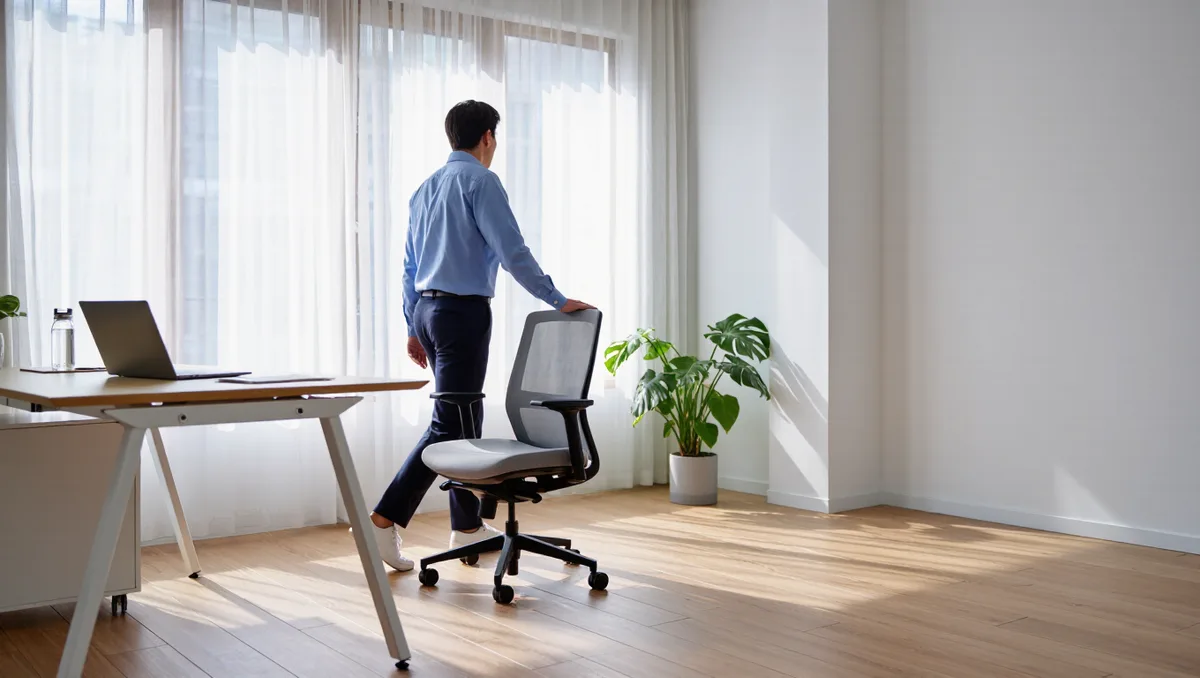
If you work at a desk, your day is full of plans to move more. Then a meeting runs long, then another, and suddenly the afternoon is gone and you have barely left your chair. You are not lazy. The setup itself works against you.
The fix is not a dramatic fitness overhaul. It is a set of tiny walking habits that fit into the day you already have. Here is why they matter and how to build them.
Why Desk Work Works Against Your Body
A sedentary lifestyle, according to Wikipedia, is a lifestyle type in which one is physically inactive and does little or no physical movement or exercise. A person living this way is often sitting or lying down while using a mobile phone or computer for much of the day. Wikipedia's overview of sedentary lifestyles ties the pattern closely to modern desk-based work.
The same source notes that a sedentary lifestyle contributes to poor health quality and many preventable causes of death. Sitting time is a common measure of the pattern, and one global review cited by Wikipedia found that the average person sits down for 4.7 to 6.5 hours a day, with the average going up every year. We covered a connected angle in Morning Light and Your Body Clock: How Many Minutes You Actually Need.
Micro-Habits That Fit Between Meetings
A micro-habit is a behavior so small it survives a bad day. Walking suits the role well. Wikipedia describes walking as a low-impact type of exercise, with possible health benefits, and notes that it needs no special gear beyond comfortable shoes. Wikipedia's entry on walking covers the basics.
- Take one call on your feet and pace while you talk.
- Walk a short loop after lunch before you sit back down.
- Refill your water bottle at the farthest point, not the nearest.
- Use stairs for one floor as a small daily default.
- Park at the far end of the lot, or get off one stop early.
None of these takes more than a few minutes. That is the point. Each one adds movement to a day that would otherwise be still. Pick the ones that match your space and your schedule. A hallway works as well as a park, and a call you already take is a chance you already have.
Make the Walking Habit Stick
Habits run on cues. Wikipedia's summary of habit formation notes that a context cue can be a prior action, a time of day, or a location that triggers a habitual behavior.
So attach each walk to an event you cannot miss. A phone call ends, you stand up. Lunch is finished, you walk the loop. The cue does the remembering for you, which matters most on busy days.
Start Today With a Simple Plan
- Pick a couple of micro-habits from the list above, not ten.
- Tie each one to a fixed moment in your day.
- Track them with a simple mark on your calendar.
- After a week or so, add one more if the first ones feel easy.
Keep the bar low on hard days. One hallway lap still counts, and keeping the pattern alive matters more than the distance. If you miss a day, do not chase it with a huge session tomorrow. Just start the loop again at the next natural cue. For related coverage, see Sleep Consistency vs. Duration: Which One Matters More?.
Conclusion
Desk work keeps you still by design, and long sitting hours are common, as the global review summarized by Wikipedia shows. Walking micro-habits push back in small, repeatable ways: pace during calls, walk after lunch, and let existing cues trigger each step. Start small, keep each habit tied to a clear moment, and let the pattern grow on its own schedule.
This article is for general education only. It is not medical advice. If you have concerns about mobility or health, speak with a qualified professional.